Showing posts with label Horse Training. Show all posts

Thursday, February 28, 2008

Horse Training Tips - Halting for Strength


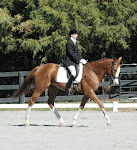
Did you know one of the easiest strengthening exercises to do is as simple as halting? When done properly, working with halts can help your horse develop the muscles to carry himself in a lighter, more balanced frame under the rider. Here's a few tips to improve the quality of your halts:

  • Minimize the Hand Aide. The more "help" you offer with the hand, the less likely the horse is to balance herself on her own. Let closing the hand be the last thing you do, and try to eliminate pulling back alltogether.

  • Don't Rush the Halt - Abruptness is the enemy to a good halt. The horse should glide into stillness, not lurch. Try encouraging the horse to take a few smaller steps before halting, and visualize the hind legs taking one more step after the front legs have stopped.

  • Make Sure Your Horse Accepts Your Legs. If you can't close your lower leg in without your horse leaping forward or tensing, you need to address this before halts can be productive. A really good halt starts with a steady closing leg (to gather the horse and keep his balance from shifting into your hand).

  • Lift Against a Leaner: If your horse leans into the bit in the halt, stay back in the saddle and lift both hands by bending your arms at the elbow while closing the leg. When she backs off the bit, immediately lower your hands. Repeat many times.

  • Repeat the mantra: Patience & Praise. Halts can take a long time to improve. Taking breaks by doing unrelated exercises in between the halting work will help ensure sure halts don't become a source of anxiety for your horse.

photo courtesy of Seven Oaks Farm

Friday, February 8, 2008

Horse Training Tip - Help for 3 Common Longing Problems


Longing is a great winter time warm-up tool when the cold air has given your horse that extra boost of energy you might not want to handle under saddle. Here are three common problems the Good HorsePerson has helped riders to improve on in their longing skills (note: these tips assume you and your horse have already aquired basic longing training and your horse is able to handle small circles):

Problem: The circle is uneven (horse ducks/cuts-in on one side).
Fix-It: Analyze why your horse is cutting-in - is there something scary on that side, is the footing deeper, etc... At the trot, bring the horse in to a smaller circle, 10meters or so and walk toward the "bad place" a few bigs steps every time he comes around the circle, moving the center of the circle closer to the undesirable area. When he or she is used to working in that area only, move the circle back to the middle and let him back out on the line - as the horse approaches the "bad place" take a big step toward him to encourage him to stay out.

Problem: The horse is lazy/doesn't listen to voice commands. The biggest complaint is usually trot-canter.
Fix-It: If you are finding yourself yelling and throwing the longe whip around, you are working too hard. Your horse has probably gotten used to your antics and is tuning you out. First, go back to the Go-and-Whoa exercise (walk-halts in-hand) to make him focus on you. Then return to the longing circle, but keep it fairly small, within reach of the longe whip. Let the horse walk for a bit, but not so long his mind wanders, then give the trot voice command. Wait one beat (2 strides) to give him a chance to respond, then dole out a swift flick of the longe whip - it's okay to let the lash hit him above the hock. Be serious here, since you are trying to make an impression and leave it behind. No matter how boldly the horse moves off, let him go and let him out on the big circle, even if it's cantering and squealing. Let him canter until you sense him tiring, then ask for trot right before you think he's ready to break on his own. He will think you're a wizard. Bring him to walk, back into the small circle and then ask for trot again. He should remember the whip from the first time, but if he lags more than a beat, dole it out again. Repeat until he trots from the simple voice command. If this demand for his attention stresses your horse out a great deal, wait until tomorrow to repeat the other direction. Remember it's very important to let the horse move out whenever you have to get after him with the whip - do not accidently punish by catching him with the line or you will send a mixed message.

Problem: The horse persistantly counter-bends one or both directions.
Fix-It: First, it's important to note that an odd head or body carriage on the longe line can indicate a lack of muscling/uneven conditioning. Longing is a good place to start conditioning such a weakness, but you may need to examine yourself for how you might to contributing to the the uneveness as rider. To counter-act counter-bending, you first need to establish a good connection on the longe line - the horse should be confident, hold a steady circle and respond well to the commands. Then it's time for loose side-reins. Adjust them just enough to keep the horses head from totally inverting but not so tight that he is necessarily "round." The main work is still done by you, not the the side-reins. When the horse is traveling at a steady pace at the trot on side-reins, give a light but steady pull on the line until the horse starts to give by coming in on the circle, then immdiately step toward him to push him out again. The line will go momentarily slack, then he will connect again - at this moment try to give some resistance on the line so that the horse is discouraged to counterbend. If he still counterbends, pull the line in again and repeat. You will have to do this over and over - think of it as a game and your horse may also - "you want to go there, I want you to go here. Not there, here. Not there, here." When he is there for a few beats, give him a verbal good for encouragement. Also keep in mind your horse's body is conditioned to carry his head that way, it will not be fixed overnight - you are stretching muscles on his frame while he is moving at speed, so be patient.

Email training questions to the Good HorsePerson at Showsheen@aol.com

Thursday, January 31, 2008

Horse Training Tip - In Hand Exercise #2 Leg Yield Down the Wall

We promised, here it is...
What you Need - a fence or enclosed arena, bridle, dressage or piaffe whip.

With your horse bridled in a kind bit, position him or her facing the fence or the wall in the riding arena. Standing on the left side of the horse, just in front of the shoulder, facing his hindquarters, place the reins over his head and gather both reins in your left hand so you have a light contact. Your hand should be roughly in the middle of the neck between ear and the shoulder. Ask the horse to take a sideways step away from you, crossing the hind legs, by tapping him lightly above the hock (piaffe whip) or on the hindquarters as close as you can get to the area above the hock with the dressage whip. As he moves away, move with him, mirroring the horse's movement by crossing your legs. Use your position by the neck to influnce his shoulder to move more or less as needed to keep him facing the wall or fence. When the hindquarters get too far ahead, catch up the shoulder by pushing on the neck, releasing the pressure as soon as he moves. When the shoulder gets too far ahead, "catch" it by applying pressure on the outside rein (turn your wrist to tighten outside rein). You and your horse will be bobbly and coordinated at first - any movement sideways should be praised in the beginning. Eventually, you both will catch on. If your horse gets flustered, return to the Go and Whoa exercise and dole out some praise there.

Tomorrow is Ask the Farrier Day!

BTW, these are the Good HorsePerson's MOST favorite dressage whips - not too hard, not too "floopy," light and easy to hold, the best part of all- they're CHEAP. $10, really.
http://www.dressageextensions.com/ProductDetail.asp?KEY=1615
Photo Courtesy of http://dragonflyeyes.org

Wednesday, January 30, 2008

Horse Training Tip - Got the Winter Riding Blues? Try In-Hand Work!


Something about winter...cold hands, cold toes, that cold air sweeping against your face as you ride around in the too-dusty indoor or, even worse, in the frozen or too-muddy outdoor.


Don't feel like riding today? The Good HorsePerson doesn't blame you...but here's an alternative that an improve the relationship between you and your horse for when the weather improves and riding is more fun again. A note to consider before doing any in-hand exercises - the Good HorsePerson is assuming your horse is already properly broken to lead, accept the bridle and generally respect your space.

Go and Whoa - In Hand Exercise:
Walk your horse (bridled, with a kind bit) in-hand around your riding arena. You should walk with purpose and slightly in front of his or her shoulder. Without warning, stop walking. If your horse is paying attention, he should stop with you. But if you don't usually make him focus on you, he probably will keep walking. Let him hit the bit, don't budge from where you stopped. Your horse will probably turn to you and spin around a little, with a surprised look. That's ok. Repeat a few times and your horse will be keeping his eye on you and stopping without any pressure from the rein. If he or she is a dull to your aide and repeatedly hits the bit, go ahead and pull back sharply - quick and to the point. After you achieve the goal of stopping without pressure, if your horse is willing, up and ante and try some trot-work transitions - then, for more adventure, the trot to halt. If your horse is keen to learn, he will catch on and you will have a fun training game to play. It's "natural horsemanship" - no wands or rope halters necessary. If your horse is not so keen to play, you can make it more interesting with treats - try the LifeSavers Wintergreen Peppermints - many horses like them, they are individually wrapped and do not melt like regular peppermints.

www.candystand.com
Repeat this exercise each day (on the way to and from the riding arena or turnout paddock is a good time) and you will notice your horse is more and more focused on you and your body language rather than what his or her buddies are doing in the field. It's simple, but it works.

Check back tomorrow for another In-Hand Exercise - Leg-Yield Down the Wall.