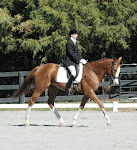
This weekend, the National Capital Show Jumping Tournament in Ottawa, Ontario will feature a "Horse-Less" Show Jumping Competition in which human competitors of all ages tackle miniaturized horse show jumps on foot. The crowd-pleasing competition, which has classes ranging from Short Stirrup to Grand Prix at the height of 3' (on a course full of creative sponsored jumps designed by Guilherme Jorge of Brazil) will raise funds for JustWorld International, a nonprofit organization that provides short-term assistance to developing countries with the hopes of breaking the cycle of poverty. JustWorld improves the quality of life and education for children in Brazil, Cambodia, Honduras, Kenya, Mexico, and Senegal. JustWorld was founded in 2002 by former Grand Prix Show Jumper Jessica Newman. High performance equestrians from around the world can sign up to become Rider Ambassadors who wear the JustWorld colors on their jackets and saddle pads, helping to bring attention to the causes of the organization.
The Horse Less Horse show classes will be held in the US later this month at the Hampton Classic Horse Show in New York.
For more information about JustWorld or to find out how you can become a sponsor or a rider ambassador, please visit http://www.justworldinternational.org/ or contact Executive Director Jessica Newman at jnewman@justworldinternational.org.
Photo credit: www.startinggate.ca
Friday, August 14, 2009
Horse-Less Show Jumping Classes to Benefit Underpriviledged Kids Around the World


Friday, July 24, 2009
Steffan Peter's New Saddle Pad from Professional's Choice
 Steffen Peters, winner of the 2009 World Cup and 2009 Grand Prix Champion at Aachen, has developed an exclusive line of Dressage Saddle Pads manufactured and distributed by Professional’s Choice.
Monday, June 29, 2009
HorseTV launches HSPAN - Horses On Demand!

HorseTV, the first television network dedicated to providing programming for the equestrian lifestyle delivered all around the world, has announced the launch of H-SPAN, an online channel dedicated to the horse industry.
According to HorseTV, "H-SPAN delivers live, interactive, moderated and archived equine and equestrian debates, symposiums, meetings and educational presentations twenty-four hours a day on an on-demand schedule."
Some programming available on H-SPAN right now:
- The Kentucky Intl Equine Summit
- Natl Horse Youth Leaders Symposium
- Kentucky Horse Park Foundation Video
- American Horse Council's National Issues Forum
H-SPAN can broadcast your meetings or debates, symposiums, book releases, speeches or clinics... email them to apply: ideas@horsetv.com.
Friday, May 22, 2009
Club Equestrian Site by USEF Offering Free Event & Business Listings

USEF members can also list their equine business in the online business directory, which is organized by state and broken down into a myriad of categories and subcategories from Training and Boarding to Alternative Health Care.
Wednesday, April 22, 2009
Steffan Peters Edges Out Werth to Win World Cup Final with 84.95%

photo credit: AP Photo
Tuesday, April 14, 2009
2009 Kentucky Derby - This Year's Opportunity

Thursday, March 26, 2009
Debbie McDonald will be Celebrity Guest Speaker at the 2009 PVDA Ride for Life

The Potomac Valley Dressage Association announced last week that they have confirmed Olympic Bronze Medalist and World Cup Champion Debbie McDonald as the Celebrity Guest Speaker at their annual Ride for Life competition on June 27-28th, 2009. The Ride for Life supports breast cancer research in coordination with John's Hopkins.
Ride for Life's Saturday night Dancing Horse Challenge and Gala features international quality exhibition performances, dinner options and a well stocked silent auction, which includes a riding clinic donated by McDonald. The event is held at Prince Georges Equestrian Center in Upper Marlboro, MD. Tickets are available at the door starting at 6pm on June 27th, $15 per person.
According to PVDA, the Dancing Horse Challenge has become one of the largest and well attended dressage freestyle competitions in the Mid-Atlantic Region.
For more information about the show, visit Ride for Life's newly revamped website:
Friday, March 13, 2009
Star Athlete Profile: Combined Driver Chester Webber
 Chester Weber won the four-in-hand division at the Sunshine State Combined Driving Event at the Florida Horse Park last weekend.
I have been admiring Webber since seeing his exhibition at the Washington International Horse Show in D.C. last October. The four-in-hand dressage is really something to see...a really impressive example of obedience and submission.
In 2008, Webber became the first American to win an individual medal the Four-In-Hand World Championship, held in the Netherlands. He was also named Equestrian of Honor by the United States Equestrian Federation for dominating most of the combined driving divisions throughout 2008. One of his competition horses, Jamaica, was named 2008 Horse of Honor. Jamaica was a former tourist carriage horse rescued from the slaughterhouse and trained by Webber into a world class combined driving athlete.
Webber intends to qualify for the 2010 Alltech FEI Word Equestrian Games to be held right here in the states at the Kentucky Horse Park. Tickets go on sale beginning September 25, 2009.
Tuesday, February 3, 2009
Are You Ready for the Spring Shows?
- A box stall with mats and fresh bedding for your horse to relax before and after your ride.
- Standard size dressage arena ready for Fix-A-Tests, practicing or designing your freestyle or learning new figures.
- Huge indoor arena with lights, mirrors and dust-control.
- Heated bathroom with shower available for your use.
- Patient, competant instruction, goal-setting and specific exercises to work on.
Going out of town before a show? Send your horse for training for only $35 a day.
Other services available:
- Show Coaching
- Full Training/Competition Packages
- Sales and Brokerage
- Lessons on School Horses
- Rehab, Lay-up and Conditioning
- Re-Training/Help for Behavior Problems
Friday, January 30, 2009
Strategies for Preventing Founder

Click Here to register for the Laminitis Webinar.
Thursday, January 15, 2009
The Origins of the Posting Trot
 The beauty and efficiency of the posting trot is easily appreciated by all types of English style riders. But many riders and trainers - including myself - will have difficulty telling you exactly how posting became such a staple of riding or how the term "posting" came to represent the standing and sitting motion of a rider on horseback.
Drill Regulations for Signal Troops, The US War Department, 1917
Thursday, August 7, 2008
Treating a Hoof Abscess
 I've received two emails asking for....
A Simple Guide to Treating a Sole Abscess:
If you are waiting for a sole abscess to resolve itself your vet or farrier has probably already removed the shoe. I don't reccomend soaking the hoof unless the shoe is removed and the horse is on stall rest. Soaking softens the hoof structure, which could lead to bruising or a lost shoe.
1) Get out everything you need within arm's reach of your horse: Bucket, epsom salts, rag, duct tape cut into 6" strips, hoof sized square of cotton batting or a disposable diaper, vetrap, ichthamol dressing, latex glove, scissors
2) Dissolve epsom salts in enough warm water to cover the top of the hoof. Remove any debris on the hoof. Soak hoof in bucket for 10 minutes.
3) Remove hoof and dry thoroughly with rag. Do not let hoof touch the ground so it stays clean. Work fast so that he doesn't get tired of holding the hoof up. Using latex glove, apply a thin layer of ichthamol dressing to the sole of the hoof and place the square of cotton batting over the sole.
4) Wrap the hoof with an entire roll of vetrap, starting at the heel and wrapping in even spaces all the way down around the toe, back to the heel and down again until you run out. Vetrap is really stretchy - don't pull too tight as you wrap. The end of the vetrap sticks to itself. Apply the strips of duct tape starting at the toe until the bottom of the hoof is covered. Then he can put the hoof down. Put two more strips of tape at the toe and just above the toe to form a "boot" of sorts that he won't wear through with his hoof. If he can walk reasonably well, take him out for a few minutes of hand grazing near the barn. If you walk too far, you will wear out the boot! Don't forget to pick his other feet and use Thrushbuster or another thrush remedy as needed since your horse will be cooped up in the stall for the next few days.
Wednesday, June 4, 2008
The Tell-Tale Smell: What Scent Can Tell You Around Horses
 If you've been around horses long enough, you might have realized already that your sense of smell can play an important role in proper horsekeeping. Knowing what smells can indicate and what your horse "normally" smells like can give you early indicators of changes in his or her health.
Food Smells:
- Smelling hay for mold can detect "on the fence" hay that doesn't look obviously moldy but maybe isn't the best hay to feed.
- Smell grain to see if it's sour or musty (it's hard to get a sense for this until you compare bad grain with fresh grain)
Horse's Breath:
- Take a good whiff of you horse's breath to give yourself a baseline of what he or she smells like. If it suddenly changes - it could indicate a digestion or tooth problem: infections (like a tooth abscess) smell like rotten eggs while ulcers or upset stomachs can smell sour, like bad wine.
Urine/Manure Smells:
- The potency of urine smells can range from faint to knock-you-back with ammonia and changes in the strength of smell are normal based on diet. Changes in pasture (weed growth) are the most common contributors to changes in urine smell.
- With manure odor, it's best to know what is "normal" for your horse. A horse that eats a higher protein diet may have a more "meaty" smell (think dog poo) and a horse with higher carbs may give off a more sour odor. It's normal for each horses manure to smell different - horses can actually identify each other by catching whiff from a pile.
Hoof Smells:
- Most horsepeople have had a good whiff of the thrush smell - a combination of rotten eggs, sewage and bacterial infection. Thrushbuster will probably do the trick, but if the thrush is deep in the crevices, you may benefit from having the blacksmith gently clean out the cleft and open the heels to make sure you can get your hoofpick along the entire length of the frog.
- Hoof abscesses can also smell - a foul, rotten-flesh smell - once they open and drain. If your horse has a hoof abscess, make sure he is current on his tetanus vaccine. Your veterinarian may need to prescribe antibiotics depending on the severity of the abscess.
Image courtesy of www.nps.gov
Monday, May 12, 2008
Preventing Barn Fires

- No Smoking
- No Trash Burning
- No Parking within 15 feet of the barn (including blacksmiths).
Numbers one and two are a given, but as far as farrier parking, if you barn doesn't boast a separate shoeing shed, it could be tricky to ask your farrier to park this distance away - a good farrier may make many trips to the anvil to adjust shoes for each horse, and especially if your cross ties are not right on the end of the aisle, your risk of a cranky farrier might be worse than the risk of barn fire!
Tools for Fire Prevention:
- Early detection systems (smoke detectors)
- Sprinkler system (cha-ching!)
- Fire Extinguishers
- Keep hoses attached to water source
- Have access to an alternative water source like a pond (where no hydrants are available)
- Have halters hanging at each stall
These are all excellent points. Be sure to treat ponds and standing water for mosquitos to reduce the transmission of disease (and the high annoyance factor).
Organize Stored Materials to Reduce Risk:
- Store hay and bedding as far as possible from the horses or in a separate building (listen for the sounds of you barn staff groaning) and only stack dry hay.
- Store chemicals and fuel away from the barn.
- Keep the barn dust down.
An often overlooked note for this time of year is the dust that collects in and around barn fans. Clean the fans before turning them on in late spring!
Have an Escape Plan:
- Call 911 if you see smoke or fire.
- Make sure there are two exit points in each banr.
- Designate a meeting place away from barns for head-counting.
- Post the exit plan at each barn door with the address of the facility.
Click here to subscribe to Dressage Today. Have a happy and safe Spring!
photo courtesy of the Cape Cod Fire DepartmentWednesday, April 30, 2008
An Up Close Look at Big Brown, Now Sponsored by UPS
The GoodHorseperson's Pick to win the Kentucky Derby arrived at Churchill Downs the day before yesterday - click the video above to get an up-close peek at Big Brown! He looks healthy, fit and happy - a gorgeous horse! Yesterday, UPS announced it would sponsor the aptly named Big Brown - jockey Kent Desormeaux will wear brown pants with the UPS logo.
The Derby will only be Big Brown's fourth career start - we hope he will remain undefeated and that his win will encourage the kind of purposeful and careful training we have seen his trainer, Rick Dutrow, have so much success with.
Television coverage of the Derby starts at 5pm on Sunday, May 3rd on NBC. The post time for the race is 6:04pm. You might also consider Kentucky Derby online betting as an easy alternative to the travel and the crowds.
UPDATE!
Congrats to Big Brown and all his People for Winning the Derby!
Monday, April 28, 2008
Watch the Rolex Three-Day Event on NBC on May 4th!
 On Sunday, May 4th at 5pm Eastern Time NBC will broadcast a one-hour special of the Rolex Four-Star Event held at the Kentucky Horse Park last weekend. This year, the Rolex was a qualifying event for the 2008 Olympics.
We won't describe the action here, in case you don't want a spoiler, but if you do, check out full coverage at Horses Daily.
According to a press release on the official Event website, the Rolex Kentucky Three-Day Event is expected to attract an attendance of 95,000. Highlights from the event will be aired on U.S. national television NBC Sports on May 4 to some 1.2 million households in the United States.
This is great opportunity to support equestrian sports and encourage more national television networks to fork over more airtime for our pursuit - so please, tune in!
Friday, April 18, 2008
Why Every Horse Needs to be a Sales Horse

Thursday, April 10, 2008
Good HorsePersons Picks for the 134th Kentucky Derby
 Calling all Good HorsePeople! Now is the time to bone up on your racing repertoire...the Derby is less than a month away!
Here's the Good HorsePerson's Picks for the Derby so far:
1) Big Brown: this gorgeous light bay colt by Boundary (Northern Dancer lines) has only raced three times! And all three times, he won with grace and good form. We admire the way this colt has been carefully and steadily brought back from problem quarter cracks last year. And we really admire BB's current trainer, Rick Dutrow, and his strategy of using work-outs instead of races to prepare for the Derby. Not only is it kinder for the horse (and so, a good example for the entire racing community) it's also the strategy Michael Matz used to prepare Barbaro when he won the Derby two years ago.
2) Pyro: Since two good showings in the Risen Star and the Louisiana Derby, this dark bay grandson of A.P. Indy has topped favorite lists around the web.
3) War Pass: On the opposite end of the earnings spectrum than Big Brown (over 1.5 million), this grandson of Mr. Prospector was on the way to Derby undefeated before coming in last in the Tampa Bay Derby (he had won the six previous races). But the colt redeemed himself by fighting hard on Saturday, when he finished second in the Wood Memorial, even with three staples in his chin from a accidental cut he got while traveling the Thursday before. His trainer, Nick Zito, reports that he is proud of the effort.
Online betting and detailed coverage on the history, opinions and picks for the 2008 Kentucky Derby is available online at a reputable racebook.
Wednesday, April 9, 2008
A Death in the Family: What to do When A Horse Passes Away
 Recently the Good HorsePerson received an email asking advice for helping a good friend mourn the loss of her long-time equine companion. While everyone grieves differently, here are a few thoughts about managing the death of an equine partner:
Friday, April 4, 2008
Ask the Farrier: Shoes for Jumping a Flat-Footed Horse?

Farrier Arvin Reynolds answers:
When you start jumping a flat footed horse in a competitive way, especially out in the field where terrain can be rocky or otherwise unpredictable, shoes are a must to protect the soles. I would recommend full pads during show season or heavy training, for additional protection against bruising. Leather pads (as opposed to plastic) allow the hoof to breathe and reduces the potential for debilitating thrush build-up. Your farrier should inject a supportive material between the pad and the hoof to help keep dirt and debris from getting under the pad. I normally use Equipak CS.
Finally, you might consider asking your farrier to roll the toes of the shoes to facilitate break-over.
I'm not aware of any shoes marketed specifically for flat-footed horses at this time, however, the Rick Redding Roller Motion or "banana" shoe might be applicable here.
Good luck with your new horse!
Arvin Reynolds can be reached by phone at 703-895-4786 or email AGRShoeing@aol.com